What results can you realistically expect from fat freezing?
Fat freezing, also known as cryolipolysis, is often promoted as a way to tackle stubborn pockets of fat without surgery. That broad description is accurate, but it can also create unrealistic expectations if the finer details are not explained clearly. The evidence suggests that cryolipolysis can reduce localised fat in selected areas of the body, with most people seeing around 10-25% fat reduction per treatment session, rather than dramatic overall weight loss.
In simple terms, this is a body contouring treatment, not an obesity treatment. It is designed for people who are already reasonably close to their target weight but have specific areas that do not respond as they would like to diet and exercise. Common treatment areas include the abdomen, flanks, thighs, upper arms, back, bra line and under the chin.
The treatment works by controlled cooling. Fat cells are more vulnerable to cold than surrounding tissues, so they can be selectively affected without surgery. According to peer-reviewed research indexed by PubMed, the cooled fat cells gradually die and are then processed by the body over time. This gradual elimination is why results are not immediate.
If you are considering treatment, it helps to think of cryolipolysis as a way to improve shape and proportion rather than a way to change the number on the scales. For a fuller overview of the treatment itself, see our fat freezing cryolipolysis treatment page.
Why this distinction matters
One of the most important expectation-setting points is that fat freezing does not remove visceral fat, the deeper abdominal fat linked with metabolic health risks. Research and expert reviews have consistently framed cryolipolysis as a treatment for subcutaneous, pinchable fat rather than internal fat or obesity-related health issues. That means it may improve contour, but it should not be viewed as a substitute for medical weight management, healthy eating or regular activity.
For anyone weighing up different options, comparisons such as fat freezing vs liposuction surgery or fat freezing vs Mounjaro can help clarify where cryolipolysis fits in the wider picture.


How much fat reduction is typical?
The most commonly cited result is a reduction of roughly 10-25% in the treated fat layer after one session. Some studies report figures around 20-27% in certain treated areas, while others find a more typical range nearer 10-15%. This variation is important, because online marketing can sometimes highlight the upper end of the range without making clear that not everyone will achieve it.
A review of clinical evidence published on PubMed supports cryolipolysis as an effective non-surgical option for reducing localised fat deposits, while also noting that outcomes depend on patient selection, treatment area and protocol. In practice, that means the same machine can produce different visible changes depending on the thickness of the fat layer, the body area treated and the individual’s baseline shape.
What this looks like in real life
Many people do not see a striking transformation after a single session. Instead, they may notice that:
- clothes fit a little better around one treated area
- a bulge looks flatter in fitted clothing
- their waistline or side profile appears slightly more defined
- there is better symmetry between two sides of the body
These changes can be meaningful, particularly for stubborn areas that have not shifted despite consistent lifestyle efforts. However, they are usually subtle to moderate rather than dramatic.
Will one session be enough?
Sometimes, yes. But many people choose more than one cycle on the same area to achieve a stronger contouring effect. Evidence summarised in aesthetic medicine literature suggests that additional sessions can improve the degree of reduction. A second round is commonly considered after several months, once the outcome of the first treatment can be properly assessed.
This is where an experienced provider matters. A reputable clinic should explain whether your goals are achievable with cryolipolysis alone or whether another treatment may be more suitable. In some cases, people exploring options for smaller, targeted pockets of fat may also read about alternatives such as cryolipolysis vs Aqualyx or cryolipolysis vs Lemon Bottle.
Results are measured in contour, not kilograms
Because the treatment focuses on selected areas, overall body weight may not change much at all. This often surprises people. If your main goal is to lose several stone, cryolipolysis is unlikely to be the right primary treatment. If your goal is to reduce a localised bulge while avoiding surgery, it may be a reasonable option.
Benefits and limitations of cryolipolysis results
Benefits
- Can reduce stubborn, localised fat that has proved resistant to diet and exercise
- Non-surgical and non-invasive, with no general anaesthetic or incisions
- Minimal downtime, so most people return to normal activities immediately
- Once treated fat cells are eliminated, they do not regenerate
- Can improve body contour in carefully selected areas such as the abdomen, flanks and thighs
- Suitable for people who want body sculpting without liposuction
Considerations
- Results are gradual and may take 3-6 months to fully develop
- It is not a weight-loss treatment and will not treat obesity
- Some people need multiple sessions for a more noticeable change
- Outcomes vary by body area, baseline fat thickness and individual biology
- Temporary side effects such as numbness, swelling and bruising are common
- A rare complication called paradoxical adipose hyperplasia can cause enlargement of the treated area
When will you see fat freezing results?
Patience is essential. Cryolipolysis does not melt fat away overnight. Instead, the cooling process damages fat cells, which are then gradually cleared by the body’s immune and lymphatic processes over the following weeks and months.
A realistic timeline usually looks like this:
| Time after treatment | What you may notice |
|---|---|
| 3-4 weeks | Early changes may start to show; clothes may feel slightly looser in the treated area |
| 5-8 weeks | More visible contour improvement often appears |
| Around 3 months | The most noticeable results are usually seen by this stage |
| 4-6 months | Subtle continued improvement may still occur as the body completes the clearance process |
This timetable is in line with published clinical observations and practitioner guidance. The gradual nature of the results is not a sign that the treatment has failed; it is simply how the mechanism works. If a provider promises instant shrinking, that should raise questions.
Why some areas respond differently
Different body areas may respond at different speeds and to different degrees. The abdomen and flanks are commonly treated, but tissue characteristics vary across the body. Under-chin treatments, for example, may produce a different visual impact compared with larger areas such as the lower abdomen.
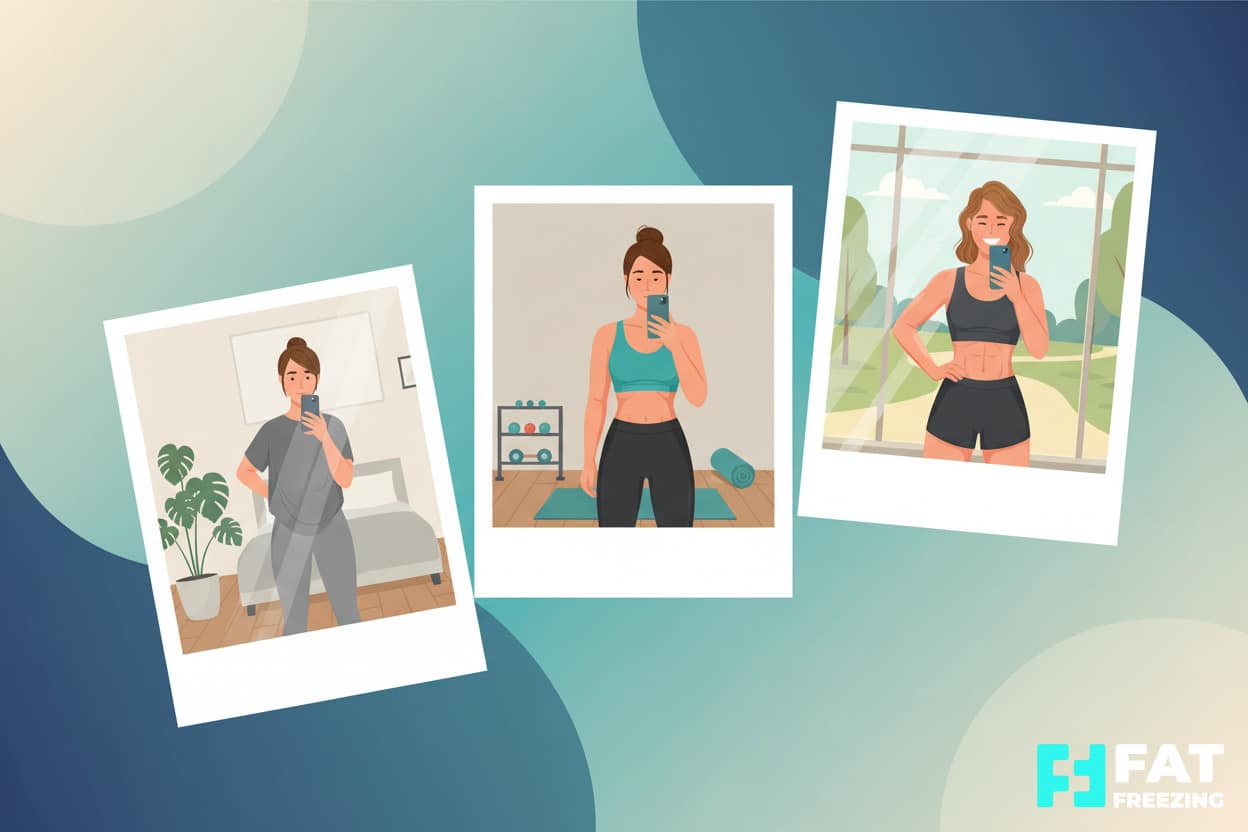
Photographs taken under standardised conditions are often the best way to judge progress, because day-to-day mirror checks can be misleading. Body position, hydration, bloating, lighting and menstrual cycle changes can all affect how a treated area appears.
What about aftercare?
While cryolipolysis has minimal downtime, aftercare still matters. Staying hydrated, following clinic advice and keeping your expectations realistic all support a better overall experience. You can read more in our guide to cryolipolysis aftercare.
At specialist providers such as Fat Freezing, the UK’s leading brand of fat freezing clinics, good aftercare and honest review of progress are part of good clinical practice. The best clinics do not just perform the treatment; they help patients understand what success should look like in their individual case.
The best cryolipolysis result is usually not a dramatic overnight change, but a gradual, natural-looking improvement in shape that still depends on long-term healthy habits.
Are the results permanent?
In a technical sense, yes: once the treated fat cells have been destroyed and cleared, those specific cells are gone and do not grow back. This is one of the key differences between cryolipolysis and ordinary weight loss, where fat cells usually shrink but remain present.
Published studies and reviews have repeatedly described this as a form of permanent fat cell reduction, and there is no good evidence that the eliminated cells regenerate. You can read more about the development of the treatment in the history of fat freezing.
But permanent does not mean maintenance-free
This is where nuance matters. Although the treated cells do not return, remaining fat cells in the body can still enlarge if you gain weight. So if someone has a successful treatment and then later adopts less healthy habits or experiences significant weight gain, the overall contour can still change.
That is why responsible clinics stress maintenance. Cryolipolysis can remove some of the cells in one localised area, but it does not make you immune to future weight gain. A healthy diet, regular exercise, good sleep and realistic expectations remain central.
In other words, fat freezing can help refine your shape, but it does not replace lifestyle basics. Articles such as staying healthy over Christmas are a useful reminder that sustainable habits matter more than short bursts of perfection.
Can it help with loose skin or cellulite?
Not directly. Cryolipolysis targets fat, not skin laxity or cellulite texture. Some people find that reducing a bulge improves how an area looks in clothing, but it is not a skin-tightening treatment. If loose skin or body texture is the main concern, other options may be more appropriate, such as HIFU body tightening or cellulite reduction treatments.

Who tends to get the best outcomes?
The ideal candidate is usually someone who:
- is close to their ideal or stable weight
- has localised, pinchable fat
- wants contour improvement rather than major weight loss
- understands that results are gradual and not guaranteed to be dramatic
- is willing to maintain their result with sensible lifestyle habits
People who expect cryolipolysis to treat obesity, replace exercise or flatten the whole abdomen in one session are more likely to feel disappointed. An honest consultation should include a discussion of whether the concern is actually fat, loose skin, posture, muscle tone or bloating, because these problems require different solutions.
How does cryolipolysis compare with other body treatments?
It depends on the goal. For example, EMSculpt is designed to target muscle tone and conditioning rather than freezing fat cells. Ultrasound Cavitation is another non-surgical fat-reduction option that some people consider. If you are comparing technologies, this cavitation comparison guide may help.
The key point is that the best treatment is not always the newest or most heavily advertised one. It is the one that matches the specific concern being treated.
Safety and side effects
For most patients, side effects are temporary and localised. Common short-term effects include redness, swelling, bruising, tingling, tenderness and numbness in the treated area. These usually settle over time. Reviews in the medical literature have not found evidence of systemic harm such as altered liver function or raised blood lipids from the treatment process itself.
However, no procedure is completely risk-free. A rare but important complication is paradoxical adipose hyperplasia, in which the treated area enlarges rather than reduces. Available evidence suggests this happens in fewer than 1% of cases, though exact incidence is still being refined. Because of this, patients should be properly consented and encouraged to read balanced safety information, such as what happens when fat freezing goes wrong.
It is also sensible to look for a clinic using appropriately regulated equipment. Fat freezing systems may be described as FDA cleared, which refers to regulatory clearance in the United States for certain devices and indications. While that is not the same as a blanket guarantee of outcome, it can be one useful marker when assessing credibility alongside practitioner experience, consultation standards and aftercare.
For broader healthcare context, the NHS guidance on cosmetic procedures is also worth reading before choosing any elective aesthetic treatment.
Cryolipolysis can permanently reduce treated fat cells, but it cannot replace a healthy lifestyle or promise the same result for every body.
Frequently Asked Questions
How soon will I notice results from fat freezing cryolipolysis?
Some people notice early changes after around 3-4 weeks, often as a subtle difference in how clothing fits. More visible contouring commonly appears between 5 and 8 weeks, with the most established result usually seen at about 3 months. Mild continued improvement may still occur up to 4-6 months as the body completes the clearance of treated fat cells.
Is fat freezing permanent, or can the fat come back?
The treated fat cells that are successfully destroyed and cleared are considered permanently removed. They do not regenerate. However, that does not mean the body cannot change in future. If you gain weight, remaining fat cells in the treated and untreated areas can still enlarge, which may affect your overall shape. That is why long-term maintenance depends on lifestyle as well as the procedure itself.
How much fat can one session remove?
A single session typically reduces the treated fat layer by around 10-25%, depending on the area, the technology used and the individual. Some people are pleased after one session, while others choose additional treatment cycles for greater contour change. An ethical clinic should explain that cryolipolysis offers modest to moderate body sculpting rather than dramatic weight loss.
Does cryolipolysis help with weight loss?
No. Cryolipolysis is a body contouring treatment for localised, pinchable fat, not a weight-loss programme. It does not treat obesity and it does not address visceral fat. If your main goal is significant weight reduction, you may need a different approach involving nutrition, activity, behavioural support or medical care. Cryolipolysis is best suited to refining shape once you are already near a sustainable weight.
What side effects should I expect after treatment?
The most common side effects are temporary and local, such as redness, swelling, bruising, tenderness, tingling and numbness in the treated area. These usually settle over days to weeks, although altered sensation can sometimes take longer to fully resolve. A rare but serious risk is paradoxical adipose hyperplasia, where the treated area becomes larger rather than smaller. Make sure this is discussed during your consultation.
How can I get the best possible result from fat freezing?
The best results usually come from good candidate selection, realistic expectations and consistent habits after treatment. Staying close to a stable weight, eating well, exercising regularly and following aftercare advice all help preserve the contour improvement achieved. It is also important to choose a reputable clinic with proper consultation, suitable equipment and clear follow-up. Reading independent reviews and balanced information, including recent fat freezing reviews, can also be useful.