
Fat freezing vs liposuction surgery: the key difference
If you are comparing fat freezing with liposuction surgery, the most important thing to understand is this: both treatments are designed for body contouring, not weight loss. They can reduce stubborn areas of fat that have not responded to diet and exercise, but they do so in completely different ways.
Fat freezing – cryolipolysis is a non-invasive treatment that uses controlled cooling to target fat cells. Over the following weeks and months, the body gradually processes and removes a proportion of those cells naturally. Clinical evidence has shown a typical fat reduction of around 20-25% per treated area per session, with some studies reporting up to 27% in selected cases, as outlined in peer-reviewed cryolipolysis research indexed by PubMed.
Liposuction, by contrast, is a surgical procedure. A surgeon makes small incisions, inserts a cannula and physically suctions out fat during one operation. This means it can remove a much larger volume in a single session, often delivering more dramatic contouring straight away. Guidance and patient information from the NHS on liposuction explains that it is a cosmetic surgical procedure rather than a treatment for obesity.
In simple terms, fat freezing suits people who want a non-surgical option for smaller, localised areas. Liposuction usually suits those who want quicker, more noticeable fat removal and are prepared for surgery, recovery time and a higher risk profile.
As the UK’s leading brand of Fat Freezing (Cryolipolysis) clinics, Fat Freezing focuses on non-surgical fat reduction and related body contouring treatments. For many people, that approach is appealing because it avoids incisions and fits around work, childcare and everyday life more easily than an operation.

How each procedure works
How fat freezing works
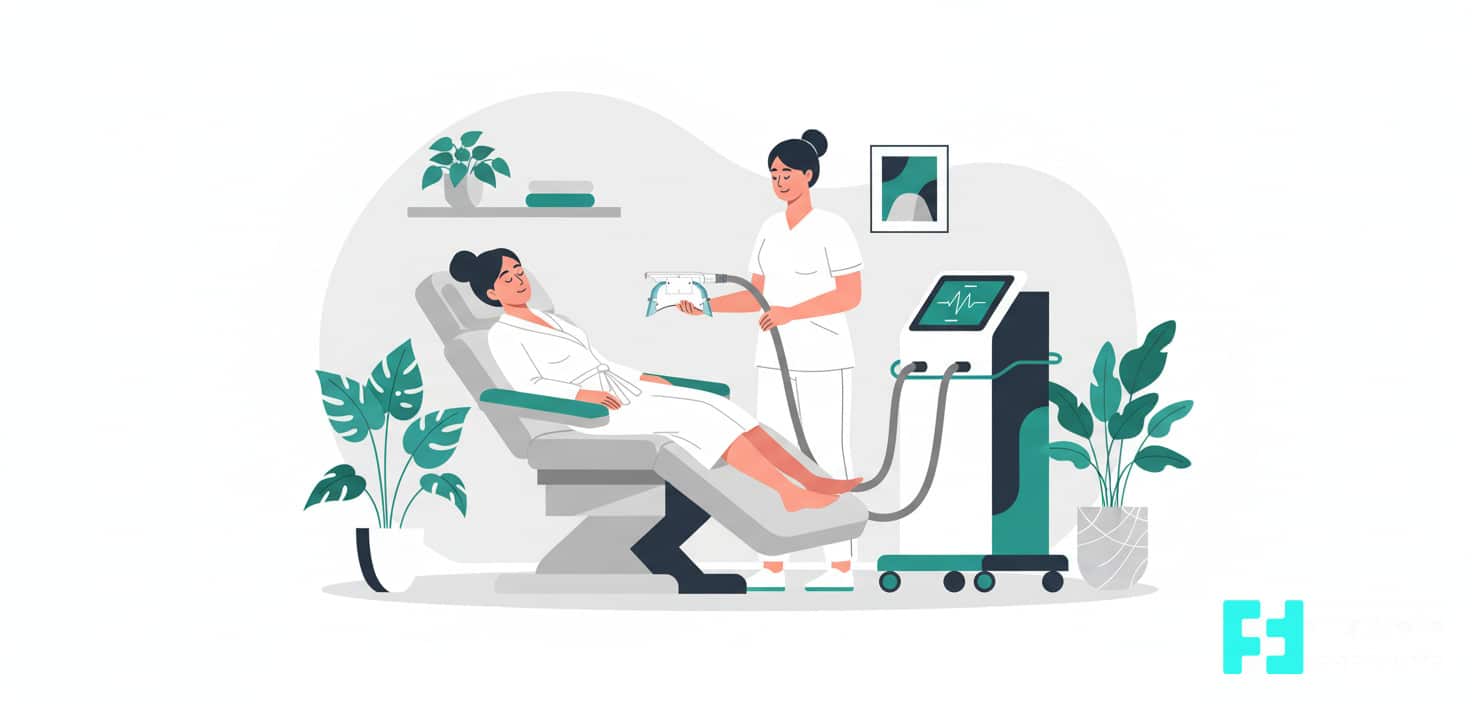
Fat freezing, also known as cryolipolysis, works by exposing targeted fat cells to controlled cooling. Fat cells are more vulnerable to cold than surrounding tissues, so the treatment aims to crystallise them without damaging the skin. The body then gradually clears the affected cells through normal metabolic processes over several weeks to months. A session usually takes around 35-60 minutes per area and does not require incisions or anaesthesia.
This makes it particularly suitable for small, pinchable pockets of fat, such as the lower abdomen, flanks, thighs or bra bulge. It is best thought of as a precision contouring treatment rather than a dramatic transformation in one sitting. If you are exploring alternatives, our comparison of fat freezing vs ultrasound cavitation explains how non-surgical options differ in their approach.
How liposuction works
Liposuction is minimally invasive surgery. The surgeon creates small incisions, injects fluid where appropriate, loosens fat with a cannula and removes it with suction. The procedure may be carried out under local or general anaesthesia depending on the area treated, technique used and scale of the procedure. The operation often lasts between one and three hours, although this varies.
Because liposuction physically removes fat during the procedure, it can reduce much larger volumes in one session. According to established clinical and surgical guidance, liposuction may remove around 50-70% of fat from a treated area, and some procedures involve total removal volumes in the region of 5-8 litres, depending on patient safety and surgical planning.
Quick comparison table
| Aspect | Fat Freezing | Liposuction |
|---|---|---|
| Invasiveness | Non-invasive | Minimally invasive surgery |
| Incisions | None | Yes, small incisions |
| Anaesthesia | Not usually needed | Often required |
| Session length | 35-60 minutes per area | Often 1-3 hours |
| Number of sessions | Often multiple | Usually one |
| Typical use | Small, localised fat pockets | Larger-volume fat removal and reshaping |
Both treatments should be planned around realistic goals, stable weight and proper medical assessment. Neither is a substitute for healthy eating, physical activity or medical weight management where that is needed.
Fat Freezing vs Liposuction: Benefits and Considerations
Benefits
- Fat freezing offers a non-surgical route to reducing stubborn fat, with no incisions and no usual downtime.
- It suits people with small, localised fat pockets who want a gradual, natural-looking change.
- Treatment sessions are relatively short and everyday activities can usually be resumed immediately.
- Liposuction removes a larger amount of fat in one session, making it more effective for substantial contouring.
- Results from liposuction are visible much sooner because fat is physically removed during the procedure.
- Liposuction can be highly precise in experienced surgical hands, especially when reshaping larger areas.
Considerations
- Fat freezing removes far less fat per session, so multiple treatments may be needed for the desired result.
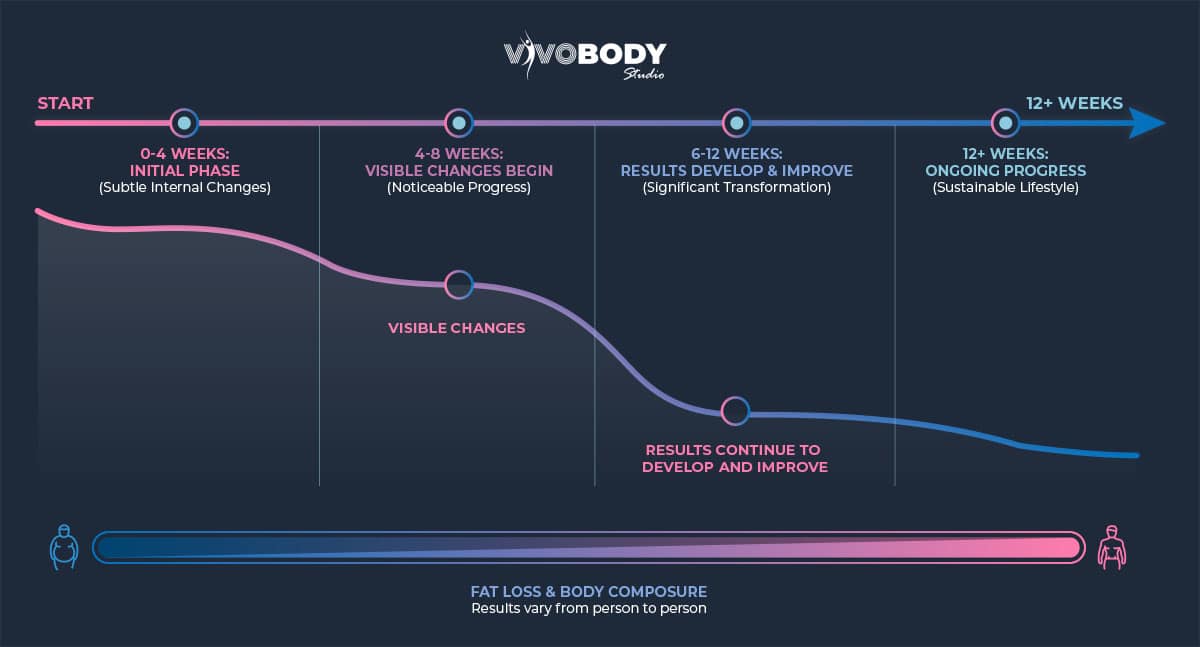
- Visible changes from cryolipolysis develop gradually over 1-6 months rather than immediately.
- It is not suitable for loose skin, significant obesity or people seeking a major one-off transformation.
- Liposuction involves surgery, anaesthesia, recovery time and more aftercare.
- There is a higher risk of complications such as infection, contour irregularities, blood clots and scarring compared with non-surgical treatment.
- Downtime, compression garments and temporary activity restrictions can make liposuction less convenient for busy lifestyles.
Results: how much fat can each treatment remove?
This is where the biggest difference lies.
Fat freezing generally reduces the fat layer in a treated area by around 20-25% per session. That can make a genuine visible difference, especially on smaller zones like love handles or the lower tummy, but it is not equivalent to surgery. Results usually begin to show from around one month, with the most noticeable change often appearing between three and six months.
Liposuction can remove far more fat in a single operation. That is why it is commonly chosen when someone wants a more dramatic contour change or has a larger treatment area. Although there is immediate improvement in shape, swelling can mask the final result at first, so the true outcome often becomes clearer over one to three months.
Patient selection matters. Cryolipolysis is typically better suited to people who are near their ideal weight, often with a BMI below 30, and who want to target isolated areas of resistant fat. Liposuction may be considered for larger areas or patients with higher BMI, although suitability depends on the individual, their health status and the surgeon’s assessment.
One common misconception is that fat freezing removes as much fat as liposuction. It does not. Another is that either treatment will lead to major weight loss. Again, not true. These procedures are about shape and proportion, not the number on the scales.
If you are deciding between different non-surgical contouring options, you may also find it useful to read about cryolipolysis vs Aqualyx and how fat-dissolving treatments compare with cooling-based methods.
What about skin tightening?
Neither fat freezing nor liposuction is primarily a skin-tightening procedure. If skin laxity is part of the concern, combination planning may matter. For example, some patients look at HIFU body tightening to support firmer-looking skin alongside body contouring, depending on their goals and suitability.
If your goal is subtle, non-surgical refinement, fat freezing may be enough. If you want larger-volume fat removal in one go, liposuction is usually the stronger option.
Downtime, recovery and day-to-day practicality
Recovery is often the deciding factor for many people.
Fat freezing recovery
One of the main attractions of fat freezing is the minimal disruption. Most people return to work, driving and normal daily activities straight after treatment. Some temporary redness, numbness, bruising, tingling or tenderness can occur, but these effects are usually mild and settle over time. For more on what to expect afterwards, our guide to cryolipolysis aftercare explains why post-treatment habits can influence comfort and outcomes.
Liposuction recovery
Liposuction requires a more involved recovery. Swelling, bruising and discomfort are expected, and compression garments are commonly needed. People may need several days to a few weeks away from some normal routines, depending on the extent of surgery and the type of work they do. Exercise is often limited for up to six weeks. The NHS notes that bruising and swelling can be significant, and it can take time for the final result to settle.
That difference matters in real life. If you have a demanding job, a busy family schedule or simply cannot accommodate surgical downtime, non-invasive treatment may be easier to fit around your life. On the other hand, some people prefer one operation and one recovery period over attending several non-surgical sessions.
Risks and side effects: which is safer?
No cosmetic treatment is entirely risk free, and honest comparison is important.
Fat freezing risks
Fat freezing has a lower-risk profile than surgery. Typical side effects include temporary bruising, redness, numbness or sensitivity. A rare but recognised complication is paradoxical adipose hyperplasia, where the treated area enlarges rather than shrinks. It is uncommon, but patients should be told about it during consent. A review of cryolipolysis safety and efficacy available through PubMed supports its generally favourable safety profile when used appropriately.
Liposuction risks
Liposuction carries more significant risks because it is surgery. Potential complications include infection, bleeding, fluid imbalance, contour irregularities, scarring, anaesthetic reactions and blood clots. Serious complications are uncommon in appropriately selected patients treated by experienced practitioners, but the risk level is clearly higher than with non-surgical options. The NHS liposuction guidance and information from the British Association of Plastic, Reconstructive and Aesthetic Surgeons are useful starting points for understanding surgical considerations.
For safety, the quality of the provider matters just as much as the treatment itself. Whether you choose cryolipolysis or surgery, assessment, consent, aftercare and expectations should all be handled carefully.

Cost comparison: which offers better value?
Cost is not just about the headline price. It is about how much treatment you need to reach your goal.
Fat freezing typically costs around £100-£400 per session based on the number of applicators required, and more than one session is often needed for the best outcome. For a small, localised area, that can still make sense, especially if avoiding surgery is your top priority. However, if someone wants multiple body areas treated or a more noticeable reduction, the total cost can rise quickly.
Liposuction averages around £4,500 per but varies significantly, but because it removes much more fat in one procedure, it can be more cost-effective for larger volumes. That said, surgical fees may also include consultation, surgeon’s fees, anaesthesia, facility charges, compression garments and follow-up care, so a direct like-for-like comparison is not always straightforward.
In practical terms:
- For a small stubborn bulge, fat freezing may be financially reasonable and less disruptive.
- For larger-volume reshaping, liposuction may deliver more value because one surgery can achieve what several non-surgical sessions cannot.
There are also patients who do not want surgery but need more than one type of non-invasive support. In those cases, clinics may discuss related services such as EMSculpt for muscle toning and body definition as part of an overall body contouring plan, although it serves a different purpose from fat reduction itself.
Who is a good candidate for each?
You may be better suited to fat freezing if:
- You are close to your goal weight and want to treat a localised area of stubborn fat.
- You want to avoid surgery and anaesthesia.
- You need little or no downtime.
- You are comfortable waiting weeks or months for the full result.
You may be better suited to liposuction if:
- You want a bigger change in shape from one procedure.
- You have a larger area or volume of fat to remove.
- You accept the realities of surgery, recovery and higher risk.
- You want faster visible contouring.
The best candidates for either option are generally those at a stable weight with good overall health and realistic expectations. Neither treatment prevents future weight gain, and remaining fat cells in treated or untreated areas can still enlarge if lifestyle habits change.
If your concern is not just fat volume but also texture or skin appearance, complementary treatments such as cellulite reduction may be discussed separately, since cellulite and localised fat are related but not identical concerns.
Final verdict: fat freezing or liposuction?
There is no universal winner, only the right treatment for the right person.
Choose fat freezing if you want a non-surgical, lower-risk, low-downtime option for modest fat reduction in specific areas. It is especially appealing for people who are already fairly close to their ideal shape and simply want refinement.
Choose liposuction if you want more substantial and faster contouring, are treating larger areas and are comfortable with the commitment that comes with surgery.
Above all, do not choose based on marketing claims alone. Ask about expected fat reduction, the number of sessions likely to be needed, who is carrying out the treatment, what the recovery involves and what complications can happen. A careful consultation with a qualified, experienced provider is the safest way to decide what is appropriate for your body and goals.
Neither treatment is a shortcut to weight loss; the real question is whether you want surgical volume reduction or non-surgical contour refinement.
Frequently Asked Questions
Is fat freezing safer than liposuction?
In general, yes. Fat freezing is non-invasive, so it avoids surgical incisions and anaesthesia, which gives it a lower overall risk profile. Common side effects are usually temporary and include bruising, numbness, redness and sensitivity. Liposuction carries the usual added risks of surgery, such as infection, scarring, blood clots and anaesthetic complications. That does not mean liposuction is unsafe when performed appropriately, but it is a more medically involved procedure.
Does fat freezing give the same results as liposuction?
No. Fat freezing can produce visible improvement, but it removes far less fat per session than liposuction. Cryolipolysis usually reduces around 20-25% of fat in the treated area per session, while liposuction can remove substantially more in one operation. If you want subtle to moderate reduction in a small area, fat freezing may be enough. If you want more dramatic reshaping, liposuction usually offers stronger results.
Which is cheaper: fat freezing or liposuction?
It depends on the size of the area and the goal. Fat freezing often has a lower barrier to entry because it is non-surgical, but several sessions may be needed, which increases the total cost. Liposuction has a higher upfront cost, but for larger volumes of fat it may be more cost-effective because it is typically done in one procedure. Always ask for a full written breakdown of fees, including consultations, aftercare and any repeat sessions.
How long do results last?
Results from both treatments can be long-lasting if you maintain a stable weight. Once fat cells are removed or destroyed, they do not simply regenerate in the same way, but remaining fat cells can still enlarge if you gain weight. That is why both treatments work best alongside sustainable eating habits, activity and realistic maintenance planning.
Who should avoid these treatments?
People with unrealistic expectations, unstable weight, certain medical conditions or contraindications identified during consultation may not be suitable. Fat freezing is not ideal for those seeking major weight loss or with some cold-related conditions. Liposuction may not be appropriate for people who are not fit for surgery or who cannot safely manage recovery. A proper assessment by a qualified provider is essential before any treatment plan is agreed.