
The Wegovy Pill Has Arrived: A New Chapter in Weight Loss Medicine
For the past few years, the conversation around medical weight loss has been dominated by injections. Wegovy, Ozempic and Mounjaro pens have become household names, and weekly jabs have become a routine part of life for hundreds of thousands of people. Now, that landscape is shifting again. In December 2025, the US Food and Drug Administration approved the once-daily Wegovy pill, a 25 mg oral formulation of semaglutide, making it the first oral GLP-1 medicine licensed specifically for chronic weight management and cardiovascular risk reduction in adults living with obesity or overweight.
For people in the UK exploring fat reduction options, this is significant news. The pill delivers the same active molecule as the familiar Wegovy injection, achieves broadly comparable weight loss in clinical trials, and removes needles from the equation entirely. But it also comes with strict dosing rules, a familiar list of side effects, and important questions about who it suits, when it will reach British patients, and how it fits alongside non-pharmaceutical treatments such as cryolipolysis fat freezing and other body contouring approaches.
This guide takes a detailed, evidence-based look at the Wegovy pill: how it works, what the trials show, the risks you should know about, and what it really means for anyone in the UK weighing up their fat reduction options.

What exactly is the Wegovy pill?
The Wegovy pill contains semaglutide, a long-acting glucagon-like peptide-1 (GLP-1) receptor agonist developed by Novo Nordisk. GLP-1 is a natural gut hormone that helps regulate appetite, slows stomach emptying and supports healthy insulin release. Semaglutide mimics this hormone but lasts far longer in the body, producing sustained appetite suppression that makes it considerably easier to eat less and lose weight.
Semaglutide is not new. It already exists as the Ozempic and Wegovy injections and as Rybelsus, a lower-dose daily tablet used for type 2 diabetes. What is new is the dose and the indication: the Wegovy pill delivers 25 mg of semaglutide once daily, a level specifically studied and approved for weight management rather than blood sugar control. Because less than one per cent of swallowed semaglutide actually reaches the bloodstream, the tablet uses a clever absorption enhancer called SNAC (salcaprozate sodium), which temporarily protects the drug from stomach acid and helps it pass through the stomach lining.
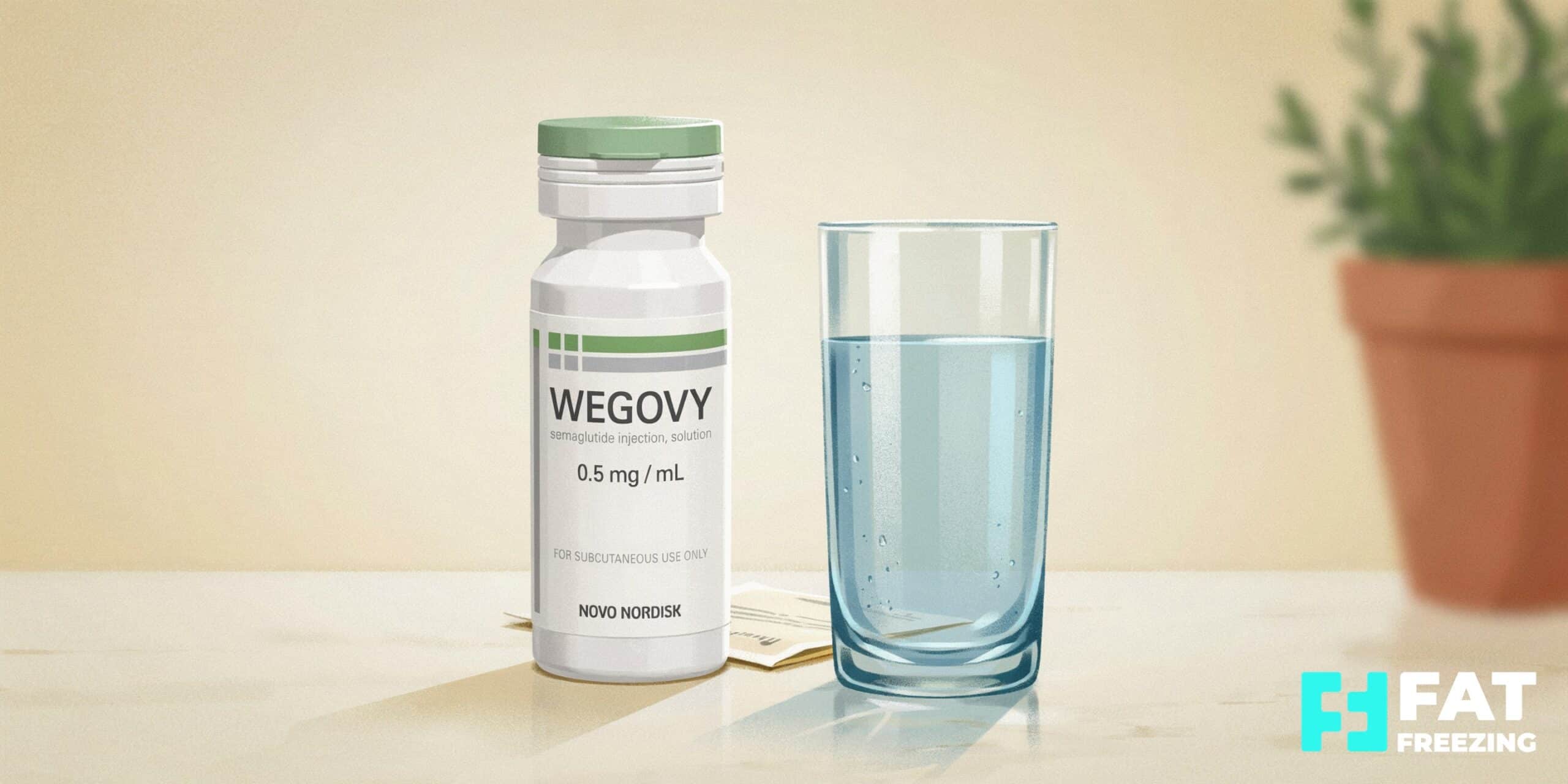
How the Wegovy Pill Is Taken: Strict Rules, Simple Routine
The SNAC technology is what makes an oral peptide drug possible, but it also dictates a very specific morning ritual. The tablet must be taken first thing in the morning, on an empty stomach, with no more than four ounces (around 120 ml) of plain water. It must be swallowed whole, never crushed or chewed, and you must then wait at least 30 minutes before eating, drinking anything else, or taking any other oral medication. Coffee, tea, juice and even large volumes of water can interfere with absorption.
Dosing follows a gradual escalation designed to minimise side effects:
- 1.5 mg once daily for the first 30 days
- 4 mg once daily for the next 30 days
- 9 mg once daily for the following 30 days
- 25 mg once daily as the long-term maintenance dose
Unlike the injectable pens, the tablets do not need refrigeration, which makes travel and storage simpler. However, for anyone who takes essential morning medication or struggles with a delayed breakfast, the 30-minute fasting window is a genuine practical consideration. People with hectic mornings may find the once-weekly injection easier to live with.
What Do the Trials Actually Show?
The pill’s approval rests primarily on the OASIS clinical trial programme. In OASIS 4, a 71-week randomised, placebo-controlled trial, adults with obesity (or overweight plus a weight-related condition) taking oral semaglutide 25 mg lost an average of 13.6% of their body weight at week 64, compared with 2.2% on placebo. Among participants who stuck closely to the treatment, average weight loss rose to around 16.6%. Roughly one in three participants lost 20% or more of their starting weight, and physical function and quality-of-life scores improved significantly.
Higher doses have been studied too. OASIS 1, published in The Lancet, tested 50 mg daily and found average weight loss of around 15%, while OASIS 2 in East Asian adults reported a 14.3% mean reduction, with 84.3% of participants losing at least 5% of their body weight. Taken together, the results put the oral pill firmly in the same territory as the 2.4 mg weekly Wegovy injection, which produced roughly 15% weight loss in its own trials.
The pill also carries a cardiovascular indication. This stems from the landmark SELECT trial published in the New England Journal of Medicine, in which weekly injectable semaglutide reduced major adverse cardiovascular events (heart attack, stroke and cardiovascular death) by 20% in more than 17,000 adults with overweight or obesity and established heart disease. Because the pill delivers the same molecule at comparable exposure, regulators accepted that this protective effect extends to the tablet form.
The Wegovy Pill at a Glance
Benefits
- Average weight loss of around 13-16% of body weight in trials, comparable to the Wegovy injection
- No needles, no injection-site reactions and no refrigeration required
- Proven cardiovascular benefit in high-risk adults, based on the SELECT trial evidence
- Familiar tablet format that many people find easier to accept than injectables
- Improvements in physical function, mobility and quality of life alongside weight loss
Considerations
- Strict dosing rules: empty stomach, plain water only, and a 30-minute wait before food, drink or other medicines
- Gastrointestinal side effects (nausea, vomiting, constipation, diarrhoea) affected around 74% of trial participants
- Weight regain is common if the medication is stopped, so it is a long-term commitment
- Not yet licensed in the UK; European regulatory submissions are still under review
- Carries a boxed warning regarding thyroid C-cell tumours and is unsuitable for people with certain medical histories
- Causes overall weight loss rather than targeting specific stubborn fat pockets
Side Effects and Safety: What You Need to Know
The Wegovy pill shares the safety profile of the wider GLP-1 class, and it deserves honest discussion. Gastrointestinal symptoms are by far the most common issue: in OASIS 4, 74% of participants taking the pill reported nausea, vomiting, diarrhoea, constipation or abdominal discomfort, compared with 42% on placebo. These symptoms are usually mild to moderate, tend to peak during dose increases, and often settle with time, smaller meals and slower eating, but they can be severe enough that some people stop treatment.
More serious risks, while uncommon, include pancreatitis, gallbladder disease (gallstones are also a known consequence of rapid weight loss itself), and kidney injury caused by dehydration from persistent vomiting or diarrhoea. There have also been reports of slowed gut motility, including gastroparesis and ileus, across the semaglutide class. Anyone taking semaglutide should tell their surgical and anaesthetic team before any planned procedure, because delayed stomach emptying can increase aspiration risk under anaesthesia.
The medicine carries a boxed warning regarding thyroid C-cell tumours, based on rodent studies, and is contraindicated in anyone with a personal or family history of medullary thyroid carcinoma or MEN2 syndrome. It is worth stressing that human data have not demonstrated a clear increase in thyroid cancer; the warning is precautionary. Semaglutide should also be avoided in pregnancy and breastfeeding, and women planning a pregnancy are advised to stop the medication at least two months before trying to conceive.
For people with type 2 diabetes who also take insulin or sulfonylureas, the risk of low blood sugar rises and doses of those medicines may need adjusting. As with any prescription weight loss treatment, the Wegovy pill should only ever be taken under proper medical supervision, and never sourced as a compounded or unregulated “alternative” online.
The Wegovy pill is not a quick fix or a short course of treatment. It is a long-term medical therapy, and trial evidence shows that stopping it usually means much of the lost weight returns.
When Will the Wegovy Pill Be Available in the UK?
At the time of writing, the Wegovy pill is approved in the United States, where it launched in early January 2026, but it is not yet licensed in the UK or Europe. Novo Nordisk has submitted applications to the European Medicines Agency and other regulators, and a decision from the UK’s MHRA is expected to follow in due course. Until then, British patients can access semaglutide only in its injectable form.
The injectable Wegovy is already recommended by NICE for use within NHS specialist weight management services, typically for adults with a BMI of 35 or more (lower thresholds apply for some ethnic groups and for those with weight-related conditions). Private prescriptions are also widely available. If you are unsure where you sit on the eligibility spectrum, our guide to what BMI really tells you is a useful starting point, and the NHS obesity pages explain the clinical criteria in more detail.
When the pill does arrive in the UK, expect strong demand. Many people who have hesitated over injections will find a daily tablet far more approachable, and the absence of refrigeration and needles removes real practical barriers. Cost and NHS funding decisions, however, will shape who can actually access it.
Medication or Body Contouring? Two Different Jobs
Here is the point that often gets lost in the excitement around GLP-1 medicines: weight loss drugs and body contouring treatments solve different problems, and understanding the distinction matters enormously when choosing the right path.
The Wegovy pill produces overall weight loss. It reduces total body fat everywhere, driven by appetite suppression and a sustained calorie deficit. What it cannot do is choose where that fat comes from. Genetics largely determine which areas slim down first and which cling on stubbornly, which is partly why losing weight is more difficult for some people than others. Many people who lose significant weight, whether through medication, diet or both, still find themselves with resistant pockets of fat on the abdomen, flanks, thighs or under the chin.
That is where targeted treatments come in. Cryolipolysis works by cooling fat cells in a specific area until they are permanently eliminated by the body, reducing the fat layer in that precise spot rather than overall body weight. Injectable options such as Aqualyx fat dissolving injections take a similar targeted approach using a different mechanism, while EMSculpt builds muscle tone alongside fat reduction in treated areas. None of these are weight loss treatments, just as the Wegovy pill is not a body contouring treatment.
Choosing the Right Approach for Your Goals
So how should someone in the UK think about all of this? A useful framework is to start with the size of the change you are looking for and your overall health picture.
When medical weight loss makes sense
If you are living with obesity, or overweight with conditions such as high blood pressure, type 2 diabetes, sleep apnoea or established heart disease, semaglutide-based treatment can be genuinely life-changing. Average weight loss in the mid-teens of body weight percentage, plus a documented 20% reduction in major cardiovascular events for high-risk patients, puts these medicines in a category of their own. This is a medical decision to make with your GP or a specialist weight management service, not a cosmetic one.
When body contouring makes sense
If you are at or near a healthy weight but frustrated by stubborn areas that resist diet and exercise, a weight loss drug is the wrong tool. Targeted treatments such as fat freezing, Lemon Bottle fat dissolving or ultrasound cavitation are designed for precisely this scenario: sculpting specific areas rather than shifting the number on the scales.
When the two work together
Increasingly, we see people combining approaches. Someone might lose two or three stone with a GLP-1 medicine and then use body contouring to refine areas that remain disproportionate, or to address skin laxity and texture changes with treatments such as HIFU body tightening. We have explored this interplay in depth in our comparison of fat freezing versus GLP-1 weight loss medication, and the same logic applies to the Wegovy pill: the medicine handles overall weight, contouring handles shape.
As the UK’s leading brand of cryolipolysis clinics, Fat Freezing regularly consults with clients who are taking, have taken, or are considering weight loss medication. An honest assessment will sometimes mean recommending you speak to your GP about medical weight loss first, and sometimes mean confirming that targeted treatment is the better fit for your goals. There is no one-size-fits-all answer, which is exactly why a proper consultation matters.
Weight loss medication changes the number on the scale. Body contouring changes the shape in the mirror. The best results often come from understanding which problem you are actually trying to solve.
The Bottom Line
The Wegovy pill represents a genuine milestone: the first oral GLP-1 therapy approved specifically for weight management and cardiovascular risk reduction, with trial results that match the injectable version. For the many people who have been put off by needles, it could open the door to effective medical weight loss for the first time.
It is not, however, a magic bullet. It demands a disciplined morning routine, frequently causes digestive side effects, requires long-term commitment to maintain results, and is not yet available in the UK while European regulators complete their review. And for those whose concern is stubborn localised fat rather than overall weight, targeted treatments remain the more appropriate route.
The most encouraging takeaway is that people seeking fat reduction in the UK now have more legitimate, evidence-based options than ever before, from NHS-supported medical therapy to non-surgical body contouring. The smartest first step is always the same: an honest conversation with a qualified professional about your health, your goals, and which tool, or combination of tools, will actually get you there.
Frequently Asked Questions
Is the Wegovy pill available in the UK yet?
Not yet. The pill was approved by the US FDA in December 2025 and launched in America in early 2026. Novo Nordisk has submitted applications to the European Medicines Agency and other regulators, and a UK decision is expected to follow. In the meantime, semaglutide is available in the UK only as the Wegovy injection, prescribed through NHS specialist weight management services under NICE guidance or via private providers.
Does the Wegovy pill work as well as the injection?
Trial evidence suggests so. In the OASIS 4 trial, the 25 mg daily pill produced average weight loss of 13.6% at 64 weeks, rising to around 16.6% in participants who adhered closely to treatment. This is broadly comparable to the roughly 15% weight loss seen with the 2.4 mg weekly injection in its own trials. The key caveat is adherence: the pill must be taken correctly every morning, on an empty stomach with only a small sip of water, for absorption to be reliable.
What are the most common side effects of the Wegovy pill?
Gastrointestinal symptoms dominate: nausea, vomiting, diarrhoea, constipation and abdominal discomfort affected around 74% of trial participants. Most cases are mild to moderate and improve over time, particularly with gradual dose escalation, smaller meals and slower eating. Rarer but more serious risks include pancreatitis, gallbladder problems and dehydration-related kidney injury. The medication is contraindicated in people with a personal or family history of medullary thyroid carcinoma or MEN2 syndrome, and should not be used during pregnancy or breastfeeding.
Will I regain weight if I stop taking the Wegovy pill?
Most likely, yes, at least in part. Studies of semaglutide consistently show that discontinuing treatment leads to substantial weight regain over the following months, because the body’s natural appetite and metabolic adaptations push weight back towards its previous level. Semaglutide is best understood as a long-term maintenance therapy, similar in principle to blood pressure medication, rather than a short course. Sustained lifestyle changes remain essential whether or not you continue the medicine.
Can I have fat freezing if I'm taking a weight loss medication?
In many cases, yes, and the two can complement each other well. Weight loss medication reduces overall body fat, while cryolipolysis targets specific stubborn areas that often persist even after significant weight loss. Some clients prefer to stabilise their weight first so that contouring results are easier to assess. A consultation with an experienced practitioner will determine the right timing and treatment plan for your individual circumstances, and our guide comparing fat dissolving injections with GLP-1 medication explores these distinctions further.
Is the Wegovy pill the same as Ozempic or Rybelsus?
They all contain semaglutide, but they are different products with different doses and licences. Ozempic is a weekly injection licensed for type 2 diabetes; Rybelsus is a lower-dose daily tablet (3, 7 or 14 mg) also licensed for diabetes; the Wegovy pill is a higher-dose 25 mg daily tablet licensed specifically for weight management and cardiovascular risk reduction. These products should never be combined with one another or with other GLP-1 medicines, as this risks excessive drug exposure and amplified side effects.