
Two Different Problems, Two Different Treatments
Many people book a consultation hoping that one treatment will both slim a stubborn area and smooth away cellulite. It is an understandable assumption, but it overlooks an important fact: localised fat and cellulite are two distinct issues with different underlying causes. Fat freezing (cryolipolysis) is designed to permanently reduce pockets of subcutaneous fat, while cellulite is a structural condition of the skin and connective tissue that needs its own dedicated approach.
The good news is that the two concerns often coexist, and the treatments that address them can complement one another remarkably well. In this article, we look at how fat freezing with cryolipolysis works, how vacuum roller cellulite reduction treatments tackle dimpled skin, when combining them produces the best results, and which alternatives are worth exploring if neither is quite right for you.

What Cellulite Actually Is
Cellulite affects an estimated 80-90% of post-pubertal women, regardless of body size or fitness level. It is not a build-up of toxins, nor is it simply excess fat. Research published in peer-reviewed dermatology literature describes cellulite as a structural condition involving three interacting layers: the dermis, the subcutaneous fat lobules, and the fibrous septae – bands of connective tissue that anchor the skin to the deeper fascia (Journal of the European Academy of Dermatology and Venereology).
In women, these septae tend to run perpendicularly from the deep tissue up to the skin. When they thicken or shorten, they pull the skin downwards while the fat lobules between them push upwards, creating the familiar dimpled or “orange peel” appearance. Dermal thinning with age, hormonal factors and changes in microcirculation all play a part too. This structural model explains why cellulite cannot be cured by fat loss alone – slim, athletic women can have pronounced cellulite, and even aggressive fat removal can sometimes make dimpling look worse.

How Fat Freezing (Cryolipolysis) Works
Cryolipolysis exploits a simple biological quirk: fat cells are more vulnerable to cold than the water-rich skin, nerves and muscle around them. The concept emerged after doctors observed localised fat loss in children who habitually sucked ice lollies, and it was formally described by Manstein and colleagues in 2008 (Lasers in Surgery and Medicine). You can read more about the origins of the technique in our history of fat freezing.
During treatment, a vacuum applicator draws a fold of tissue into a cooling cup and holds it at a precisely controlled low temperature, typically for 35-60 minutes. The cold triggers crystallisation of the lipids inside fat cells, setting off a process called apoptosis – programmed cell death. Over the following weeks, the body’s immune system clears away the damaged fat cells naturally, and the treated fat layer gradually thins. Fat Freezing is FDA cleared, and the science behind it is explained in more depth in our guide to how cryolipolysis really works.
The evidence base is substantial. A systematic review and meta-analysis pooling data from 30 studies and over 3,000 participants found statistically significant reductions in abdominal circumference (around 3.5 cm on average) and fat thickness at three months, with a pooled patient satisfaction rate of approximately 80% (Plastic and Reconstructive Surgery). Typical fat layer reductions range from 15% to 28% per treatment area, with results visible from around three weeks and optimal results at two to four months. Because destroyed fat cells do not regenerate, the contour change is long-lasting – provided weight remains stable. Our article on what results to expect from fat freezing covers realistic timelines in detail.
Does Fat Freezing Improve Cellulite?
Here is where the nuance matters. Cryolipolysis targets fat cells, but it leaves the fibrous septae that cause dimpling largely intact. It is therefore a contouring tool rather than a dedicated cellulite treatment. That said, clinical evaluations have reported consistent improvements in skin texture and laxity following cryolipolysis, with mild-to-moderate improvement in cellulite appearance on the outer thighs in particular (Seminars in Cutaneous Medicine and Surgery).
The likely explanation is threefold: reducing local fat volume flattens the bulges that exaggerate dimples; the controlled cold injury appears to stimulate modest collagen remodelling; and in mild cellulite driven mainly by superficial fat protrusion, fat reduction alone can visibly smooth the surface. For moderate to severe cellulite, however, fat freezing on its own will not address the root cause.
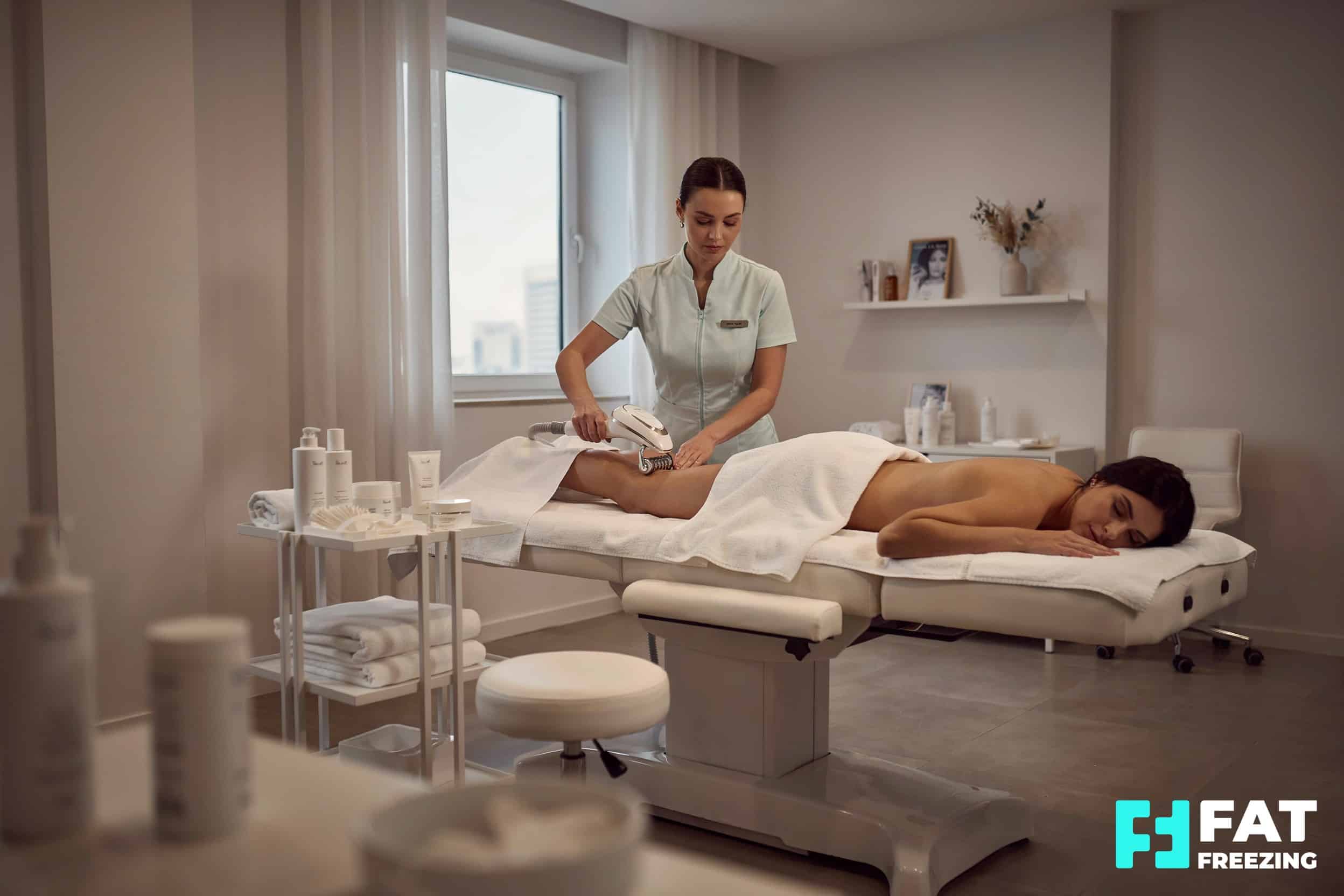
Vacuum Roller Cellulite Reduction: Targeting the Texture
Where fat freezing addresses volume, vacuum roller therapy addresses texture. This approach – sometimes known generically as mechanical massage or endermologie-style treatment – uses a handpiece that combines gentle suction with motorised rollers. As the device glides over the skin, it lifts and folds the tissue, mechanically stretching the fibrous septae, stimulating blood flow and encouraging lymphatic drainage.
The treatment works on several levels:
- Mechanical stretching of septae – repeated manipulation can soften and lengthen the tethering bands responsible for dimples, reducing the downward pull on the skin.
- Improved microcirculation – cellulite is associated with sluggish blood flow and fluid retention in the affected tissue; vacuum massage boosts circulation and helps disperse trapped fluid.
- Lymphatic drainage – enhanced lymphatic flow reduces puffiness and supports the clearance of metabolic waste from the tissue.
- Collagen stimulation – mechanical stress on the dermis encourages fibroblast activity, gradually improving skin thickness and elasticity, which helps disguise underlying irregularities.
Vacuum roller treatments are non-invasive, comfortable (most clients describe them as a firm, pleasant massage) and require no downtime. The main caveat, supported by the clinical literature on mechanical massage techniques, is that results are progressive and require a course of sessions – typically six to twelve – with periodic maintenance to sustain the improvement. Without ongoing treatment, the skin tends to gradually drift back towards its baseline appearance over months.
When Fat Freezing and Vacuum Roller Treatments Work Well Together
Because the two treatments target different layers of the same problem area, they pair together exceptionally well in the right candidate. Consider a common scenario: a woman near her healthy weight with stubborn outer-thigh fat (“saddlebags”) and visible cellulite across the thighs and buttocks. Fat freezing alone would slim the silhouette but might leave the dimpled texture largely unchanged. Vacuum roller therapy alone would smooth the texture but would not reduce the fat bulge. Combined, they address both concerns.
How a Combined Plan Typically Works
A sensible combined approach often looks like this:
- Stage one – contour: cryolipolysis is applied to the prominent fat pockets (outer thighs, inner thighs, banana roll beneath the buttocks). One to two sessions per area, spaced four to eight weeks apart, are typical.
- Stage two – texture: a course of vacuum roller cellulite reduction sessions begins, either alongside the fat freezing recovery period or once swelling has settled. Interestingly, the mechanical massage may offer a secondary benefit here: research has shown that vigorous massage immediately after cryolipolysis significantly enhances fat reduction, and ongoing lymphatic stimulation in the weeks afterwards is widely thought to support the clearance of treated fat cells.
- Stage three – review: at around twelve weeks, results are assessed and any residual concerns addressed with further sessions or alternative modalities.
This staged logic – volume first, texture second – reflects the clinical principle that you cannot properly judge cellulite severity until the exaggerating effect of fat bulges has been reduced. Good aftercare following cryolipolysis, including hydration, gentle massage and regular activity, supports both treatments.
When the Combination Is Not the Right Answer
There are situations where this pairing should be approached cautiously. If significant skin laxity is the dominant issue – common after major weight loss or in older skin – removing fat beneath already loose skin can worsen crepiness. In these cases, skin-tightening treatments such as HIFU body tightening or radiofrequency may need to come first or instead. Similarly, deep, well-defined dimples caused by strongly tethered septae respond best to treatments that directly release those bands, such as subcision-based procedures, which sit outside the scope of non-invasive clinics.
Combining Fat Freezing with Vacuum Roller Cellulite Reduction
Benefits
- Addresses both fat volume and skin texture, rather than just one component of the problem
- Entirely non-invasive with no incisions, anaesthesia or downtime
- Cryolipolysis results are long-lasting because destroyed fat cells do not regenerate
- Post-treatment massage and lymphatic stimulation may enhance fat clearance after cryolipolysis
- High patient satisfaction rates – pooled data suggests around 80% for cryolipolysis
- Fat Freezing is FDA cleared with a well-documented safety profile
Considerations
- Cellulite cannot be cured – improvements are real but partial, and vacuum roller results need maintenance sessions
- Multiple visits required across several months; this is not a single-appointment fix
- Cryolipolysis carries a small risk of paradoxical adipose hyperplasia, a rare complication where treated fat enlarges instead of shrinking
- Not suitable for significant skin laxity, cold-sensitivity disorders, or as a weight loss treatment
- Deep, tethered dimples may need septae-release procedures rather than non-invasive therapy
- Combined courses represent a meaningful financial commitment
Fat freezing changes the volume; vacuum roller therapy changes the texture. Treat both layers and you treat the whole problem - treat only one and you risk solving half of it.

Alternatives to Fat Freezing for Stubborn Fat
Cryolipolysis is one of the best-studied non-invasive fat reduction methods, but it is not the only option, and it does not suit everyone. Alternatives worth considering include:
- Fat dissolving injections – treatments such as Aqualyx and Lemon Bottle use injectable solutions to break down fat cells in smaller, more precise areas such as the chin or knees. We compare the approaches in our guide to cryolipolysis versus Aqualyx.
- Ultrasound cavitation – low-frequency ultrasound disrupts fat cell membranes, releasing their contents for natural metabolism. It is gentler per session than cryolipolysis but typically requires more visits; see our fat freezing versus ultrasound cavitation comparison.
- Muscle-building technology – EMSculpt uses electromagnetic stimulation to build muscle and burn fat simultaneously, which can be a useful complement where improved muscle tone would enhance the overall contour.
- Surgical liposuction – delivers larger, faster fat removal but carries surgical risks, downtime and cost. The NHS provides balanced guidance on cosmetic procedures worth reading before any decision.
Alternatives for Cellulite Reduction
If vacuum roller therapy alone is not delivering the smoothness you want, the wider evidence base points to several alternatives:
- Radiofrequency treatments heat the dermis to trigger collagen contraction and new collagen production, producing mild to moderate smoothing and tightening over a course of sessions – particularly useful where cellulite is accompanied by skin laxity.
- Acoustic wave therapy (ESWT) uses externally applied shockwaves to remodel dermal collagen and improve microcirculation. A clinical study using high-resolution ultrasound demonstrated genuine remodelling of dermal collagen and smoothing of the dermal-subdermal interface after a six-week course (peer-reviewed study).
- Subcision-based procedures (such as Cellfina and Avéli) physically release the fibrous bands beneath individual dimples and offer the most durable improvement for deep, well-defined cellulite – with results lasting up to three years in published trials – though they are minimally invasive medical procedures.
- Topical creams containing retinol or caffeine can modestly improve skin thickness and texture with continuous use, but no cream permanently removes cellulite, and herbal supplements marketed as cellulite cures have failed placebo-controlled testing.
For those concerned with overall lower-body shape rather than dimpling specifically, a non-surgical Brazilian bum lift can improve lift and firmness in the buttock area without surgery.
Choosing the Right Path: A Practical Framework
The most useful question to ask at consultation is not “which treatment is best?” but “what is actually causing what I see?” A simple framework:
- Mostly bulge, mild dimpling: fat freezing first; reassess texture at three months.
- Mostly dimpling, little bulge: a course of vacuum roller cellulite reduction, with radiofrequency or acoustic wave therapy as escalation options.
- Both bulge and dimpling: the combined, staged approach described above.
- Significant skin laxity: prioritise tightening treatments such as HIFU before any fat reduction.
As the UK’s leading brand of fat freezing clinics, we see every one of these presentations daily, and an honest assessment matters more than any single technology. Cryolipolysis is a contouring treatment for people near a healthy weight with pinchable pockets of fat – it is not a weight loss method, a point we explore in fat freezing versus diet and exercise. Equally, anyone considering cryolipolysis should understand the small but real risks involved, including the rare complication of paradoxical adipose hyperplasia; our article on when fat freezing goes wrong covers safety candidly. A trustworthy clinic will tell you when a treatment is not right for you – and what would be.
There is no cure for cellulite - but with the right combination of evidence-based treatments and realistic expectations, there is a great deal that can be improved.

Frequently Asked Questions
Does fat freezing get rid of cellulite?
Not directly. Cryolipolysis destroys fat cells but leaves the fibrous connective bands that cause dimpling largely intact. It can make cellulite less noticeable in some people – particularly on the outer thighs – by reducing the fat bulges that exaggerate dimples and by modestly improving skin firmness. For genuine textural improvement, a dedicated treatment such as vacuum roller cellulite reduction, radiofrequency or acoustic wave therapy is needed, often alongside fat freezing rather than instead of it.
How does vacuum roller cellulite reduction work?
A handpiece combines gentle suction with motorised rollers that lift and fold the skin as it moves. This mechanically stretches the fibrous septae that pull the skin down, boosts blood flow, stimulates lymphatic drainage and encourages collagen production in the dermis. Results build progressively over a course of sessions – typically six to twelve – and periodic maintenance treatments are recommended to sustain the improvement.
Should I have fat freezing or cellulite reduction first?
Where both treatments are appropriate, fat freezing is usually performed first. Reducing the fat bulge changes how the cellulite presents, making it possible to assess the true severity of any dimpling once swelling has settled. Vacuum roller sessions can then begin during the weeks after cryolipolysis, where the massage and lymphatic stimulation may also support the natural clearance of treated fat cells. Your practitioner will tailor the sequence to your individual presentation.
How long do the results of each treatment last?
Fat cells destroyed by cryolipolysis do not regenerate, so the contour change is long-lasting – case reports have documented results persisting six to nine years – provided your weight stays stable. Cellulite results from vacuum roller therapy are different: they tend to soften gradually over months without maintenance, because the underlying structural tendency remains. A healthy lifestyle, regular exercise and occasional top-up sessions help preserve both outcomes.
Is fat freezing safe?
Fat Freezing is FDA cleared, and systematic reviews covering thousands of patients report a strong safety profile when treatment is performed by trained practitioners with approved devices. Common side effects – numbness, redness, swelling, bruising and tenderness – are mild and resolve within days to a few weeks. The most discussed rare complication is paradoxical adipose hyperplasia, where the treated area enlarges rather than shrinks; estimates of incidence vary but it remains uncommon, and reputable clinics discuss it openly during consent. Fat freezing is not suitable for people with cold-sensitivity disorders such as cryoglobulinaemia, cold urticaria or Raynaud’s phenomenon.
What alternatives exist if neither treatment suits me?
For fat reduction, alternatives include fat dissolving injections such as Aqualyx or Lemon Bottle for smaller areas, ultrasound cavitation for a gentler course-based approach, EMSculpt for combined muscle building and fat reduction, or surgical liposuction for larger volumes. For cellulite, radiofrequency, acoustic wave therapy and minimally invasive subcision procedures (which release the fibrous bands directly) offer alternatives, with subcision providing the most durable results for deep dimples. A consultation will identify which combination matches your anatomy and goals.
